
What Is a Court Docket in Cumberland County
A docket is the official activity log and case index for a court matter. Each line records something that happened, such as a complaint filed, a motion entered, a hearing set, or a judgment signed. The Maine Judicial Branch calls the case identifier a docket number, and the docket record gathers the parties, case type, filing date, attorney information, charges in criminal or civil violation matters, and judgment information. Think of it as the table of contents for a case rather than the case itself.
The docket and the full case file are not the same thing. A docket entry might read that a motion was filed, but the text of that motion lives in the underlying document. In Cumberland County, the docket record can be searched or ordered, while the complaint, judgment and commitment, final judgment, and other documents are bought as copies or inspected at the court. Trial dockets cover Superior Court and District Court cases, probate dockets cover wills and estates, and federal dockets cover U.S. District Court matters in Portland. Each lives in its own system.
How to Find Cumberland County Dockets Online
The Maine Judicial Branch runs the electronic court system, eCourts, and its public portal is re:SearchMaine. Case types that have moved into eCourts can be searched there once a basic account exists. When a trial case is not yet online, the backup is the OTH-009 Record Search Request through the Judicial Branch Service Center, which reports the docket number and status. Probate dockets sit in a separate portal, Maine Probate Search, and federal dockets run through PACER. Pick the system that matches the court before you start.
- Identify the court. Trial cases go to Superior Court or District Court, estates go to the county Probate Court, and federal cases go to the U.S. District Court.
- Open the matching portal. Use re:SearchMaine for state trial dockets, Maine Probate Search for probate, or PACER for federal.
- Enter a party name or docket number. Use exact spelling, and add a date of birth when a state criminal search calls for it.
- Review the docket entries, then order the docket record or specific documents if you need the full file.
Western Cumberland County matters can route through nearby District Court locations, and the West Bath District Court page lists contact and hours for that regional coverage, as shown in the West Bath District Court screenshot below.
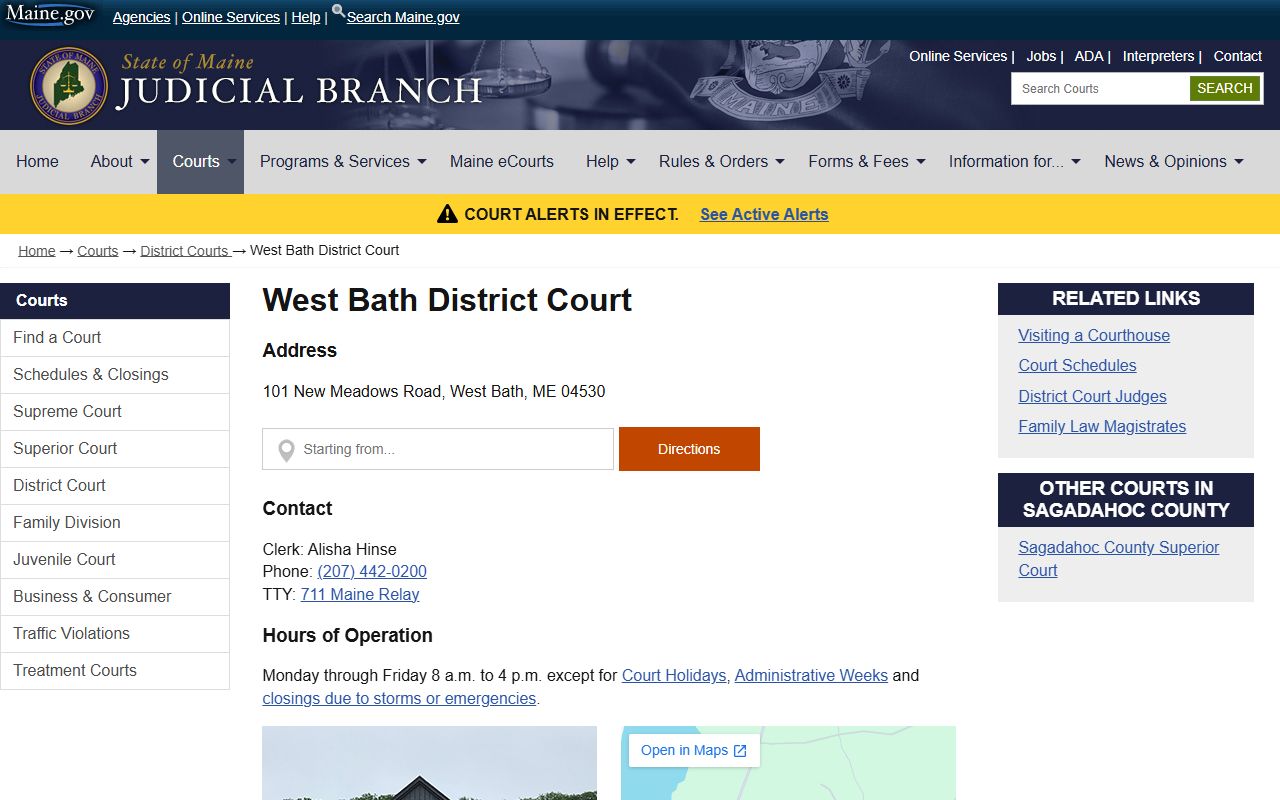
The Cumberland County District Attorney holds office hours at West Bath two days a month, so some regional case activity surfaces through that court's docket.
Sample Cumberland County Docket Entry
A docket reads as a stack of dated entries, each one a single step in the case. The fields below describe what a typical line shows once you open a Cumberland County case in re:SearchMaine or order the docket record through OTH-009. Reading the entries in order tells the story of the case from filing to judgment. The actual documents behind the entries, such as a complaint or a final judgment, are separate items that carry copy fees.
| Field | What It Shows |
|---|---|
| Entry Date | The date the event was filed or entered on the case, which sets the order of the docket. |
| Event Type | The action recorded, such as complaint filed, motion filed, hearing scheduled, order entered, plea, or judgment entered. |
| Party Filing | Which side or person submitted the document or triggered the event. |
| Case Type | The category of the matter, civil or criminal, including civil violations. |
| Status | Whether the case is pending or closed, along with values like dismissed, disposed, or sealed. |
| Document Link | Whether the docket record, complaint, judgment and commitment, or final judgment is available to view or order. |
The exact Cumberland County case-number format was not confirmed from a public sample during research, because the live portal was account gated. Even so, the docket fields stay consistent across Maine trial courts, so the structure above holds for civil, criminal, and family matters.
Courts That Publish Dockets in Cumberland County
Cumberland County fits inside Maine's court hierarchy, and each level posts dockets in its own way. The Maine Supreme Judicial Court sits at the top and acts as the Law Court on appeal. The Superior Court is the trial court for jury cases, felonies, and major civil disputes. The District Court runs high-volume work without juries. The county Probate Court is separate from the Judicial Branch and keeps estate dockets, while the Violations Bureau processes traffic infractions statewide. Federal cases run through their own courts and PACER.
- re:SearchMaine / eCourts publishes state trial dockets for Superior Court and District Court case types that are live in the system.
- Maine Probate Search publishes probate dockets for all 16 counties, including Cumberland, with the docket viewable free of charge.
- PACER publishes federal dockets for the U.S. District Court for the District of Maine, based in Portland.
- Judicial Branch Service Center reports docket numbers and status for trial cases not yet online, through the OTH-009 form.
Maine Probate Search is the public window into estate dockets, and the portal is shown in the Maine Probate Search screenshot below.
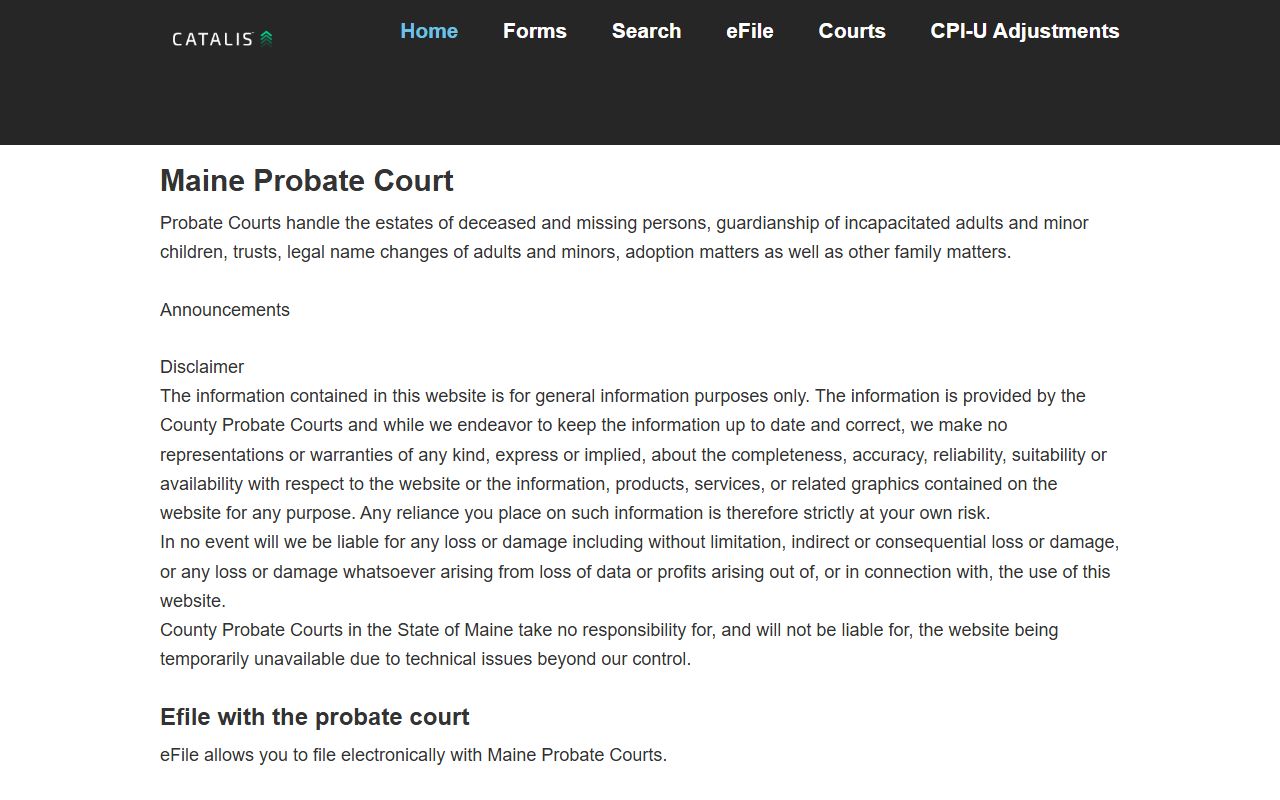
The Cumberland County Probate page notes the docket can be viewed at no charge, while document copies cost $2 per page or $1 per page through a paid account.
Federal Court Dockets for Cumberland County
Cumberland County also sits in the federal system. The U.S. District Court for the District of Maine hears federal civil and criminal cases, with its Portland courthouse serving the area. Federal dockets are not in re:SearchMaine or Maine Probate Search. They live in PACER, the national electronic access system, and in the court's own CM/ECF system. PACER registration is required for most federal docket and document access, and fee waivers may be available under federal rules. Appeals from the District of Maine go to the First Circuit.
The U.S. District Court for the District of Maine posts general case information, local rules, and filing guidance, and its homepage is shown in the U.S. District Court, District of Maine screenshot below.
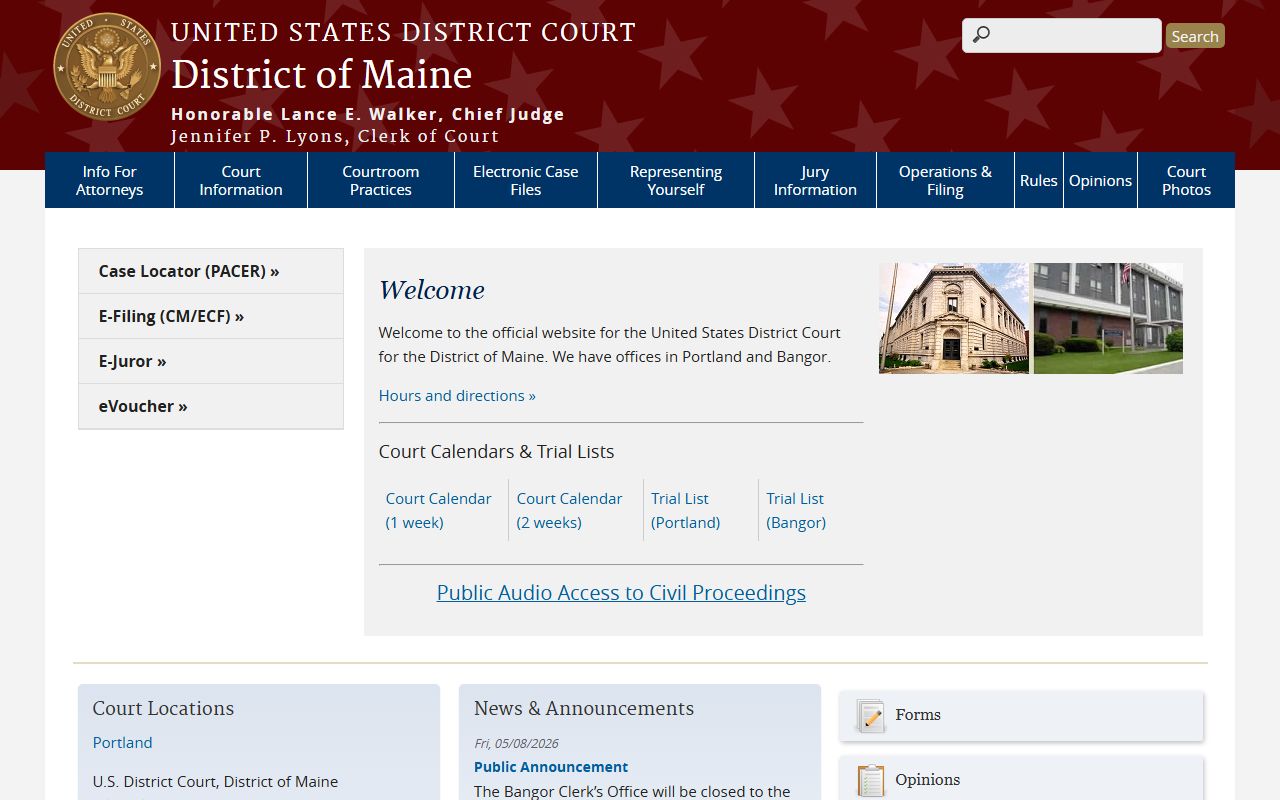
Bankruptcy is a separate track from state probate and civil dockets, handled by the U.S. Bankruptcy Court for the District of Maine and searched through PACER as well.
PACER is the central source for federal docket and document access across the country, and the portal is shown in the PACER federal dockets screenshot below.
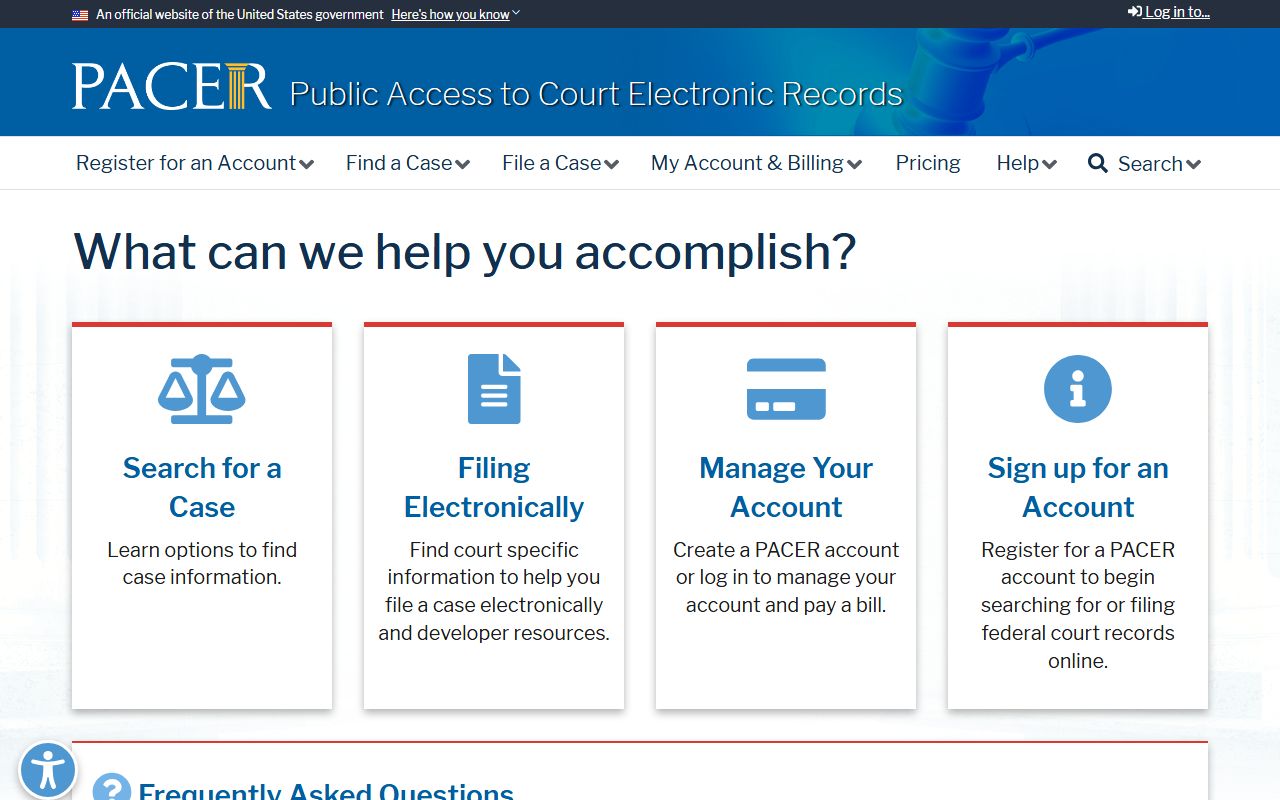
For a Cumberland County matter that turns out to be federal rather than state, PACER is the right tool, while state trial cases stay in re:SearchMaine.
Docket vs. Full Case Record
The difference between a docket and a full case record matters when you decide what to request. A docket is the list of events. A full case record is the stack of documents behind those events, including the complaint, motions, orders, and the final judgment. In Cumberland County, the docket record can often be viewed or ordered quickly, while the underlying documents carry per-page copy fees and may require a visit to the court. The table below sets the two side by side.
| Docket | Full Case Record | |
|---|---|---|
| Format | List of dated entries | Full documents and exhibits |
| Access | Often online or low cost | Copy fees or in-person review |
| Use | Track case progress and dates | Legal review, evidence, appeals |
A free probate docket through Maine Probate Search is a good example. The docket shows the case exists and lists its events, but the will, inventory, and orders are separate paid copies. For most quick questions, the docket answers them; for legal work, the documents are what count.
How to Read a Cumberland County Docket
Docket entries use a steady set of terms. A motion is a request asking the court to act. An order is the judge's ruling. A continuance postpones a hearing. An arraignment is the first criminal appearance. A judgment is the final or enforceable decision, and the disposition is the outcome of a charge or case. Reading these labels in order shows how a case moved from start to finish.
Status words tell you where a case stands. Pending means it is still active, while closed, dismissed, or disposed mean the court has acted. A criminal docket may show a plea, a sentence, probation, or restitution. Dismissed with prejudice ends the claim for good, while dismissed without prejudice leaves room to refile. A charge on a docket is not a conviction, so the disposition is the line that tells you the result. For sensitive matters, some entries are redacted because the underlying record is confidential, juvenile, or sealed.
Note: A docket that shows no public entries may mean the case is sealed, confidential, or not yet in eCourts, rather than that no case exists.